Greenock Morton

1992-93 Greenock Morton Away Shirt - 8/10 - (S)
209.99£ - ca: €248

1989-91 Greenock Morton Home Shirt - 8/10 - (S)
179.99£ - ca: €212

1996-97 Greenock Morton Home Shirt - 6/10 - (M)
107.99£ - ca: €127

2003-06 Greenock Morton Home Shirt - 9/10 - (XL)
95.99£ - ca: €113

2002-03 Greenock Morton Away Shirt - 6/10 - (S)
71.99£ - ca: €85

2015-16 Greenock Morton Home Shirt - 6/10 - (M)
53.99£ - ca: €64

2012-13 Greenock Morton Home Shirt - 6/10 - (M)
53.99£ - ca: €64

1996-97 Greenock Morton Padded Bench Coat - 5/10 - (XL)
53.99£ - ca: €64

2008-09 Greenock Morton Home Shirt - 6/10 - (S)
47.99£ - ca: €57

2017-18 Greenock Morton Away Shirt - 8/10 - (L)
47.99£ - ca: €57

2022-23 Greenock Morton Joma Hooded Rain Jacket (XL)
47.99£ - ca: €57

2019-21 Greenock Morton Away Shirt - 6/10 - (XL)
41.99£ - ca: €50

2022-23 Greenock Morton Joma 1/4 Zip Drill Top - 10/10 - (M)
41.99£ - ca: €50

2018-20 Greenock Morton Home Shirt - 7/10 - (XL)
41.99£ - ca: €50

2020-21 Greenock Morton Third Shirt - 9/10 - (L)
41.99£ - ca: €50

2018-19 Greenock Morton Retro Style '1970s' Home Shirt - 8/10 - (L)
35.99£ - ca: €42
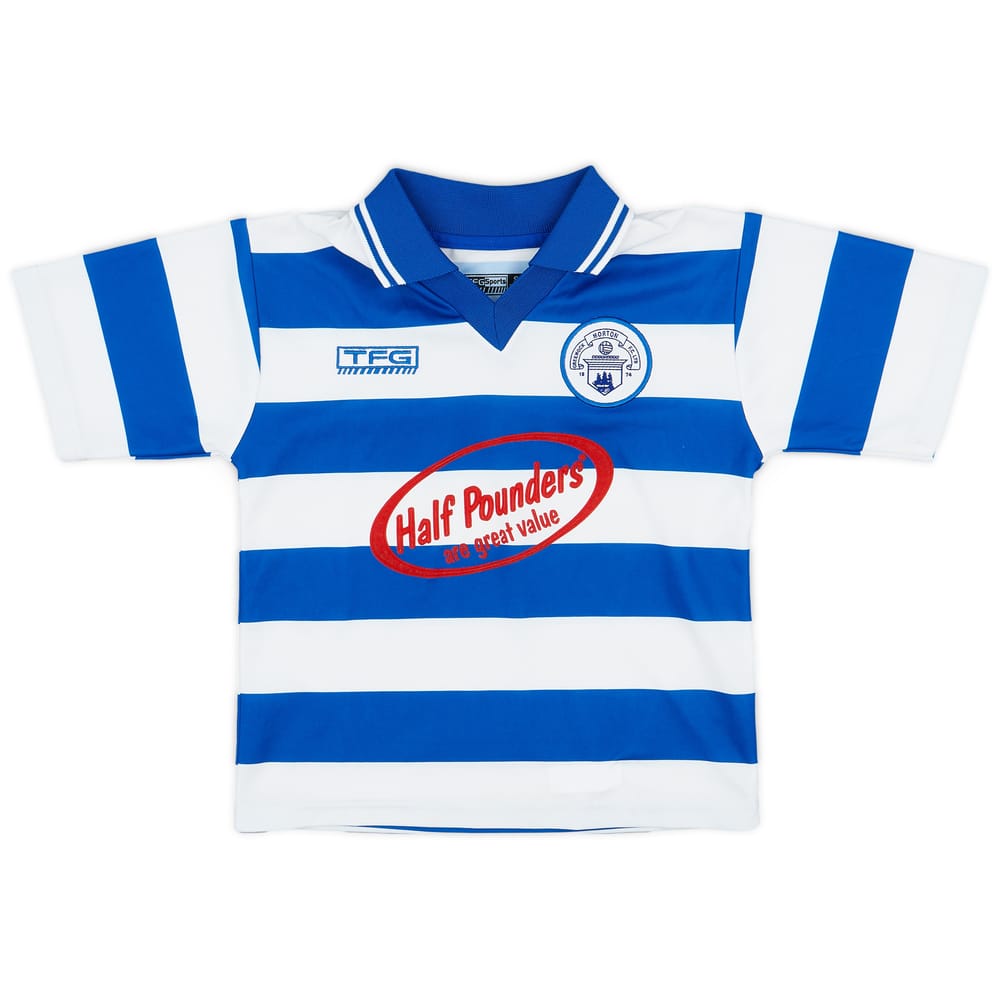
2002-03 Greenock Morton Home Shirt - 8/10 - (6-7 Years)
29.99£ - ca: €35

2021-22 Greenock Morton Home Shirt - 8/10 - (13-14 Years)
29.99£ - ca: €35

2022-23 Greenock Morton Joma 1/4 Zip Drill Top - 9/10 - (S)
29.99£ - ca: €35

2022-23 Greenock Morton Joma Track Jacket - 9/10 - (S)
29.99£ - ca: €35

2009-10 Greenock Morton Bukta Training L/S Shirt - 7/10 - (XXL)
29.99£ - ca: €35

2022-23 Greenock Morton Joma Track Jacket - 6/10 - (S)
23.99£ - ca: €28


2017-18 Greenock Morton Polo Shirt - 10/10 - (S)
23.99£ - ca: €28

2014-15 Greenock Morton Home Shirt - 8/10 - (7-8 Years)
17.99£ - ca: €21

Introduction
Greenock Morton, often simply known as Morton, is a professional football club based in Greenock, Scotland. Founded in 1874, the club boasts a rich history that reflects the deep-rooted tradition of football in the region. Morton, with its iconic blue and white colors, forms a pillar of the local community, drawing support from generations of fans. As one of the oldest clubs in Scotland, Morton is not just a football team; it’s a symbol of passion, pride, and identity for the people of Greenock.
Club History
Greenock Morton was established in 1874, originally as Morton Football Club, and played its first match shortly thereafter. The club’s early days saw it compete in various local tournaments before joining the Scottish Football League in 1893. Morton’s home ground, Cappielow Park, has been its fortress since 1903, providing a backdrop for countless memorable moments in Scottish football. Over the years, Morton has experienced its share of highs and lows—rising to the top of Scottish football during the late 19th and early 20th centuries and facing challenges as lower-tier competitions emerged.
One key historical moment for Morton was its participation in the inaugural Scottish Cup in 1874, a tournament that continues to shape Scottish football. The club has also enjoyed several promotions and relegations between the top and second tiers of Scottish football, defining its era in the Scottish Football League structure.
Achievements
Greenock Morton has achieved significant success throughout its more than 145 years in existence. The club’s most notable achievement came in 1984 when it won the Scottish Football League Second Division, a feat that marked a resurgence for the team. In addition, Morton has triumphed in the Scottish Cup, reaching the final in 1922 and 1952, though it fell short on both occasions. The club also boasts a unique record of winning the Scottish Challenge Cup in 1992, showcasing its capacity to compete in knockout tournaments.
Furthermore, Morton has a strong presence in lower-league Scottish football competitions, providing consistent performances that resonate with local fans. The club’s ongoing efforts to reclaim its former glory within the SPFL Championship have kept it competitive in recent years.
Significant Players and Matches
Throughout its history, Greenock Morton has been home to several significant players who have left a lasting legacy. One of the most notable is Hugh “Shug” McDonald, who played for the club in the 1960s and later returned as a manager. Another prominent figure is Tommy McLean, who not only contributed as a player but also took the reins as manager in the 1980s, leading the club to several important victories.
Specific matches also stand out in Morton’s history. The club’s thrilling encounter against Celtic in the 1970 Scottish Cup quarter-finals showcased Morton’s resilience, as they battled against one of Scotland’s footballing giants. This match remains etched in the memories of fans, highlighting the competitive spirit that Morton’s players displayed through decades of football.
Cultural Impact
Greenock Morton plays a vital role in its community, serving as a source of local pride and identity. The fans, known as the “Ton,” embody the passion and dedication that the city of Greenock holds for its football club. Morton’s matches often draw large crowds at Cappielow Park, and the atmosphere created by the supporters is a vital part of the game-day experience. The local fanbase not only engages with the team during matches but also participates in various community events, fostering a sense of belonging and camaraderie.
The club is also involved in numerous outreach programs aimed at engaging youth and promoting sports within the community. These initiatives emphasize the importance of football in enhancing local culture and community pride, further solidifying Morton’s place in the heart of Greenock.
Conclusion
Greenock Morton is an integral part of Scottish football history. With its storied past, significant achievements, and passionate fanbase, Morton has contributed immensely to the tapestry of football in Scotland. The club’s resilience in the face of challenges and its enduring commitment to community involvement only amplify its significance. Today, Greenock Morton stands not only as a football club but as a beloved institution that continues to inspire future generations of players and fans alike.
Advertising links: retro-football-shirt.com is an independent affiliate site. The buy links go to Classic Football Shirts, and we may earn a commission on purchases made through our links. The purchase is made at the retailer, where you will also find the current price, availability and terms of sale.