1860 Munich

1996-97 1860 Munich Home L/S Shirt Nowak #10 - 9/10 - (XXL)
299.99£ - ca: €354

2000-01 1860 Munich Match Issue Home Shirt Beierle #19
239.99£ - ca: €283

1995-96 1860 Munich II Match Issue Home L/S Shirt #15
239.99£ - ca: €283

1995-96 1860 Munich Home Shirt (S)
239.99£ - ca: €283

1997-98 1860 Munich Nike Rain Jacket (XXL)
239.99£ - ca: €283

1996-97 1860 Munich Home L/S Shirt - 8/10 - (L)
239.99£ - ca: €283

1997-98 1860 Munich Home L/S Shirt - 8/10 - (M)
209.99£ - ca: €248

1996-97 1860 Munich Nike Padded Bench Coat - 9/10 - (XXL)
209.99£ - ca: €248

1972-73 1860 Munich Home L/S Shirt - 6/10 - (S)
209.99£ - ca: €248

1997-98 1860 Munich Nike Rain Jacket - 8/10 - (L)
179.99£ - ca: €212

1997-98 1860 Munich Nike Track Jacket - 9/10 - (L)
179.99£ - ca: €212

1996-97 1860 Munich Nike Padded Bench Coat - 6/10 - (XXL)
179.99£ - ca: €212

1996-97 1860 Munich Nike 1/4 Zip Sweat Top - 8/10 - (XXL)
179.99£ - ca: €212

1995-96 1860 Munich Home Shirt - 9/10 - (S)
179.99£ - ca: €212

1999-01 1860 Munich II Match Issue Home L/S Shirt #10
179.99£ - ca: €212

2002-03 1860 Munich Match Issue Signed Home L/S Shirt Cerny #13
179.99£ - ca: €212

1999-01 1860 Munich II Match Issue Home L/S Shirt #12
179.99£ - ca: €212

1999-01 1860 Munich Player Issue Home L/S Shirt - 8/10 - (XL)
179.99£ - ca: €212

1996-97 1860 Munich Home L/S Shirt - 8/10 - (S)
179.99£ - ca: €212

1995-96 1860 Munich Home Shirt (XS)
179.99£ - ca: €212

1996-97 1860 Munich Nike Hooded Rain Jacket - 8/10 - (XL)
179.99£ - ca: €212

1995-96 1860 Munich Away Shirt - 7/10 - (S)
149.99£ - ca: €177

1996-97 1860 Munich Nike Sweat Top - 7/10 - (XL)
149.99£ - ca: €177

1995-96 1860 Munich Home Shirt #10 - 7/10 - (S)
149.99£ - ca: €177

1997-98 1860 Munich Home Shirt - 6/10 - (XL)
149.99£ - ca: €177

1997-98 1860 Munich Home L/S Shirt Winkler #11 - 7/10 - (S)
149.99£ - ca: €177

1999-00 1860 Munich II Match Issue GK Shirt #1
149.99£ - ca: €177

1997-98 1860 Munich Home Shirt - 8/10 - (S)
149.99£ - ca: €177

1997-98 1860 Munich Nike Rain Jacket - 7/10 - (S)
149.99£ - ca: €177

1995-96 1860 Munich Home Shirt - 6/10 - (S)
149.99£ - ca: €177

1996-97 1860 Munich Nike Padded Bench Coat - 9/10 - (XXL)
149.99£ - ca: €177

1995-96 1860 Munich Home L/S Shirt - 9/10 - (XS)
119.99£ - ca: €142

1999-01 1860 Munich Player Issue Home Shirt - 8/10 - (XL)
119.99£ - ca: €142

1997-98 1860 Munich Nike Hooded Rain Jacket - 6/10 - (XL)
119.99£ - ca: €142

2003-04 1860 Munich Away Shirt Lauth #11 - 6/10 - (XL)
119.99£ - ca: €142

2000-01 1860 Munich Player Issue GK Shirt - 8/10 - (M)
119.99£ - ca: €142

1999-01 1860 Munich Home Shirt (S)
119.99£ - ca: €142
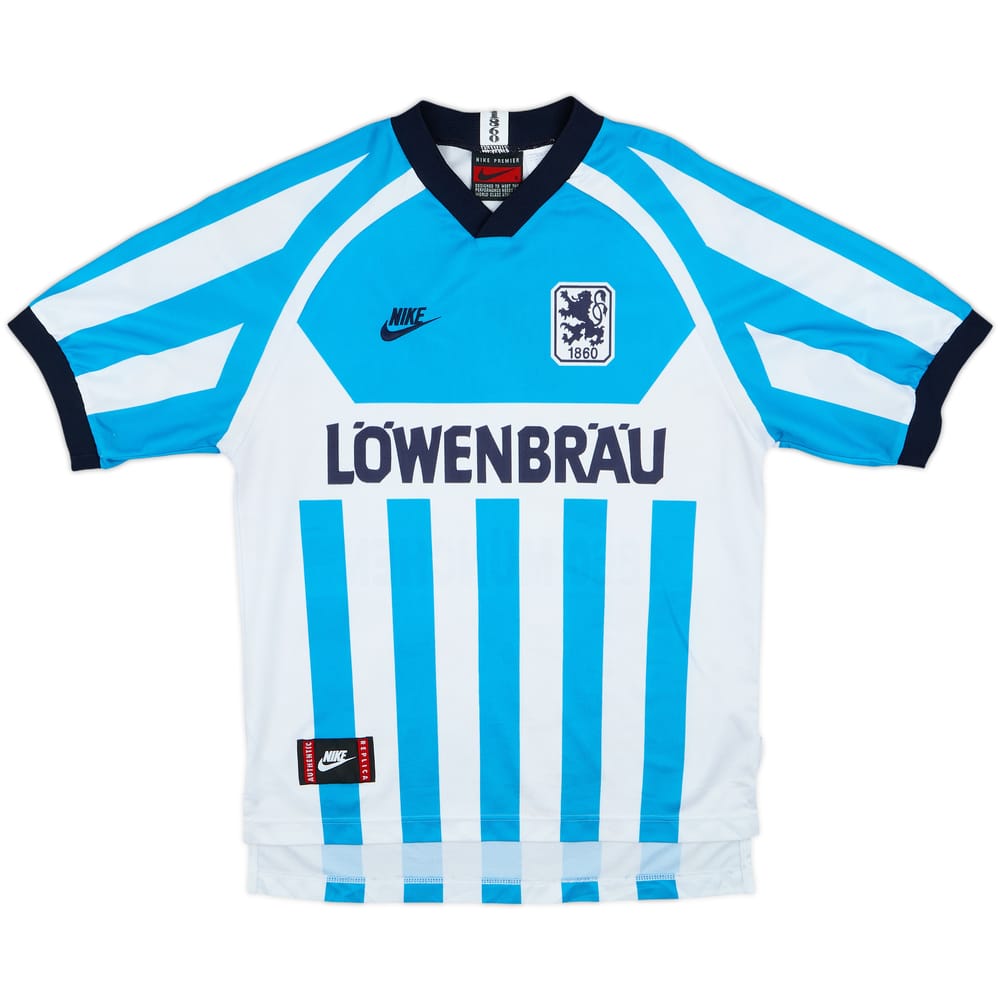
1995-96 1860 Munich Home Shirt - 7/10 - (S)
119.99£ - ca: €142

1995-96 1860 Munich Home Shirt - 7/10 - (S)
119.99£ - ca: €142

2004-05 1860 Munich Home Shirt - 8/10 - (XXL)
119.99£ - ca: €142

2002-03 1860 Munich Player Issue Nike Padded Bench Coat - 6/10 - (XXL)
119.99£ - ca: €142

1996-97 1860 Munich Home L/S Shirt - 7/10 - (15-16 Years)
107.99£ - ca: €127
Introduction
TSV 1860 Munich, widely known as 1860 Munich, is a storied football club based in Munich, Germany. Founded in 1860, it holds the distinction of being one of the oldest sports clubs in the country. The club’s blue and white colors, inspired by traditional Bavarian uniforms, have become emblematic of its identity. With a passionate fanbase and a rich history that intertwines with German football, 1860 Munich has cemented its place in the fabric of the sport.
Club History
1860 Munich was established on March 17, 1860, originally as a gymnastics club. The football section was introduced later, and by the early 1900s, the club began to enter the competitive world of German football. One of the defining moments in the club’s early history was their victory in the inaugural competition of the Southern German Championship in 1905. This win was the first of many successes for the club. In 1930, 1860 Munich became one of the founding members of the Gauliga Bayern, a top-tier league during the Nazi regime.
The post-World War II era saw the club face challenges but also opportunities. 1860 played their first match in the new Bundesliga in 1963, the first-ever season of Germany’s premier professional football league, establishing themselves as a significant force in German football. The club reached the zenith of its success in the 1965-66 season when they clinched their first and only Bundesliga title. Additionally, the club enjoyed remarkable runs in various domestic and European competitions throughout the mid-20th century.
Achievements
Over the years, 1860 Munich has accumulated an impressive list of achievements. The club has won the Bundesliga title once, in 1966. In the same year, 1860 Munich reached the final of the European Cup Winners’ Cup, where they faced Borussia Dortmund, securing their place among Europe’s elite. Additionally, the club has won the DFB-Pokal (German Cup) twice, in 1942 and 1964, solidifying their status as a competitive force in domestic football.
Beyond these significant trophies, 1860 Munich has also made its mark in lower divisions. The club has a resilient history of bouncing back, exemplified by their return to the second tier after relegation. As of 2023, 1860 Munich plays in the 3. Liga, continuing to inspire its fans and nurture talent for the future.
Significant Players and Matches
Throughout its long history, 1860 Munich has been home to many talented players who have left an indelible mark on the club. Notable figures include the legendary striker Gerd Müller, who started his career at 1860 before transferring to Bayern Munich, where he became a global icon. Another prominent player is Klaus Augenthaler, who played a crucial role in the club’s successes during the 1960s and 1970s.
Several matches have become fixtures in club lore. One standout moment came during the iconic “Munich derby” against Bayern Munich. In 2000, 1860 Munich defeated their city rivals Bayern 1-0 in a high-stakes league match, showcasing their fierce rivalry and the passionate nature of both sets of supporters. Such encounters have not just been about the three points; they have emphasized the local pride and competitive spirit within the city.
Cultural Impact
1860 Munich’s influence extends beyond the pitch, resonating deeply within the local community. The club is seen as a symbol of working-class identity, contrasting with its more affluent neighbor, Bayern Munich. The loyal fanbase, known for their raucous support, embodies the club’s spirit and history. Members of the community often cite the club as providing a sense of belonging and identity, especially during times of economic hardship. This connection is evident on match days when thousands of fans gather at the Grünwalder Stadion, creating an electric atmosphere embodying the club’s rich tradition.
Furthermore, the club engages in various social efforts, emphasizing community support and local youth development. Initiatives that promote sports among young people, celebrate diversity, and foster inclusivity resonate with the club’s core values.
Conclusion
TSV 1860 Munich holds a prominent place in the annals of football history, not only for its achievements on the field but also for its deep-rooted connection to the community and cultural identity it represents. With a blend of tradition, tenacity, and passion, the club continues to evoke pride and loyalty from its supporters. As it forges ahead, the hopes of reestablishing itself in the higher tiers of German football remain strong, echoing the undying love for the game that has unified generations of fans. 1860 Munich’s story is a testament to the profound impact football can have on lives, identities, and communities.
1 / 3
Advertising links: retro-football-shirt.com is an independent affiliate site. The buy links go to Classic Football Shirts, and we may earn a commission on purchases made through our links. The purchase is made at the retailer, where you will also find the current price, availability and terms of sale.