Aberdeen

1990-93 Aberdeen Away Shirt (XL)
419.99£ - ca: €496

1992-93 Aberdeen Home Shirt (XL)
359.99£ - ca: €425

1992-93 Aberdeen Home Shirt (L)
359.99£ - ca: €425

1989-90 Aberdeen Away Shirt (S)
359.99£ - ca: €425

1990-93 Aberdeen Away Shirt - 10/10 - (L)
299.99£ - ca: €354

1990-93 Aberdeen Away Shirt (L)
299.99£ - ca: €354

1994-96 Aberdeen Away Shirt - 8/10 - (M)
239.99£ - ca: €283

1990-91 Aberdeen Away Shirt - 9/10 - (L)
239.99£ - ca: €283

1994-96 Aberdeen Away Shirt - 9/10 - (XXL)
239.99£ - ca: €283

1994-96 Aberdeen Away Shirt - 8/10 - (L)
239.99£ - ca: €283

1994-96 Aberdeen Away Shirt - 8/10 - (M)
239.99£ - ca: €283

1992-93 Aberdeen Home Shirt (XL)
239.99£ - ca: €283

1990-91 Aberdeen Home Shirt - 8/10 - (XL)
209.99£ - ca: €248

1987-90 Aberdeen Home Shirt - 9/10 - (S)
209.99£ - ca: €248

1990-91 Aberdeen Home Shirt - 8/10 - (L)
209.99£ - ca: €248

1993-94 Aberdeen Away Shirt - 6/10 - (XL)
209.99£ - ca: €248

1987-90 Aberdeen Home Shirt - 9/10 - (S)
209.99£ - ca: €248

1993-94 Aberdeen Away Shirt - 8/10 - (S)
209.99£ - ca: €248

1990-91 Aberdeen Home Shirt - 8/10 - (S)
209.99£ - ca: €248

1992-93 Aberdeen Home Shirt - 9/10 - (XL)
209.99£ - ca: €248

1987-90 Aberdeen Home Shirt - 7/10 - (S)
179.99£ - ca: €212

1992-93 Aberdeen Home Shirt - 9/10 - (S)
179.99£ - ca: €212

1989-90 Aberdeen Away Shirt - 7/10 - (S)
179.99£ - ca: €212

1997-98 Aberdeen Home Shirt Jess #8 - 8/10 - (S)
179.99£ - ca: €212

1987-90 Aberdeen Home Shirt - 7/10 - (S)
179.99£ - ca: €212

1998-99 Aberdeen Home Shirt - 6/10 - (L)
149.99£ - ca: €177

2000-01 Aberdeen Home Shirt - 6/10 - (L)
119.99£ - ca: €142

2000-01 Aberdeen Home L/S Shirt - 5/10 - (L)
107.99£ - ca: €127

2004-05 Aberdeen Home L/S Shirt - 6/10 - (XL)
95.99£ - ca: €113

2014-15 Aberdeen Away Shirt - 6/10 - (4XL)
95.99£ - ca: €113

2004-05 Aberdeen Home Shirt - 6/10 - (XL)
83.99£ - ca: €99

2007-08 Aberdeen Home Shirt - 8/10 - (M)
83.99£ - ca: €99

2001-02 Aberdeen Le Coq Sportif Hooded Track Jacket - 7/10 - (L)
83.99£ - ca: €99

2015-16 Aberdeen Home Shirt Shinnie #3 - 10/10 - (XXL)
83.99£ - ca: €99

2003-04 Aberdeen Centenary L/S Shirt - 5/10 - (XL)
83.99£ - ca: €99

2007-08 Aberdeen Third Shirt - 8/10 - (XXL)
83.99£ - ca: €99

2014-15 Aberdeen Home L/S Shirt Logan #2 - 6/10 - (S)
71.99£ - ca: €85

2020-21 Aberdeen Away Shirt (S)
71.99£ - ca: €85
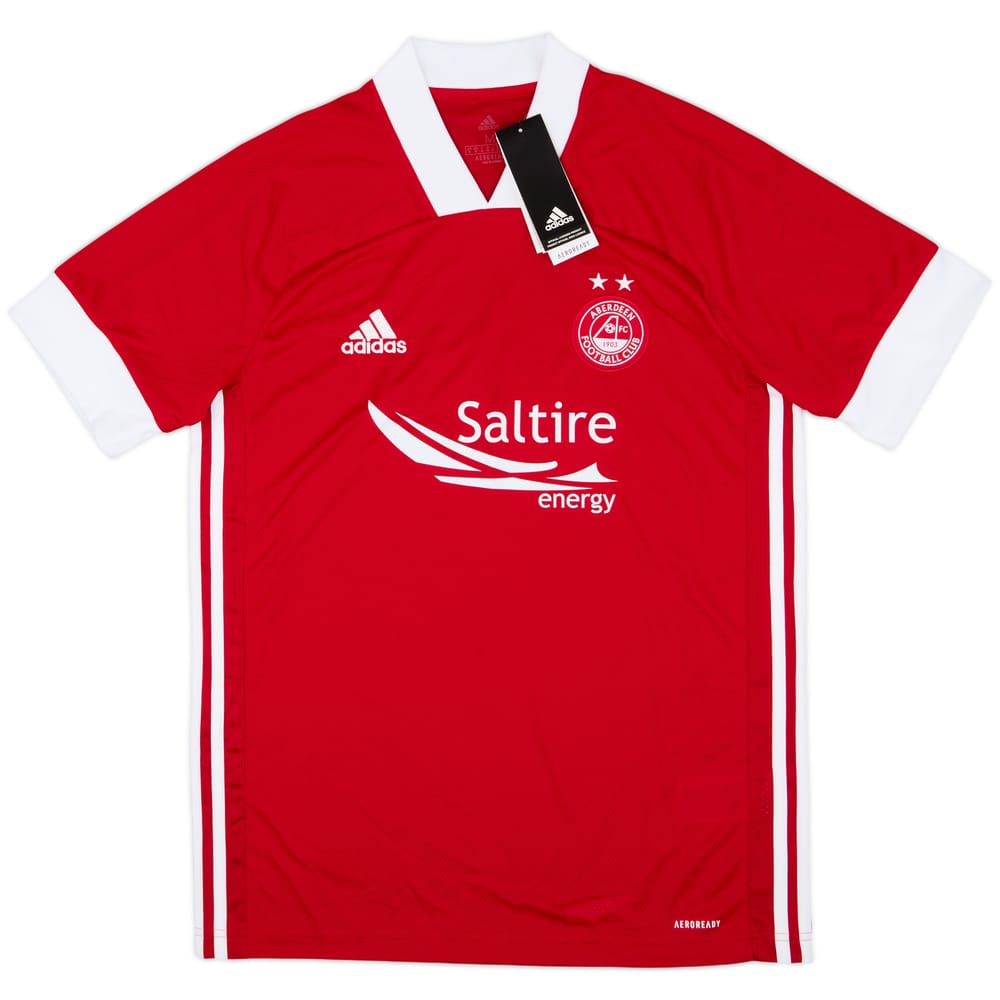
2020-21 Aberdeen Home Shirt (M)
59.99£ - ca: €71

2017-18 Aberdeen Home Shirt - 10/10 - (M)
59.99£ - ca: €71

2014-15 Aberdeen Home Shirt - 6/10 - (XXL)
59.99£ - ca: €71

2020-21 Aberdeen adidas 1/4 Zip Drill Top - 7/10 - (L)
59.99£ - ca: €71
Introduction
Aberdeen Football Club, often referred to simply as Aberdeen or The Dons, stands as a cornerstone of Scottish football. Founded in 1903, the club has not only become a source of pride for the city of Aberdeen but has also made its mark on the national and international football stages. With a rich history steeped in tradition, ambition, and community, Aberdeen embodies the spirit of Scottish football, marked by resilience and passion. The red and white colors of their kit symbolize the club’s deep-rooted identity, which has fostered an unwavering loyalty among its fans over the years.
Club History
Aberdeen Football Club was established in the early 20th century, merging several smaller clubs in the area to form a single entity that could compete effectively in Scottish football. The club’s inception came on May 14, 1903, and it quickly joined the Scottish League in 1904. Throughout the 20th century, Aberdeen played a vital role in the evolution of Scottish football, with moments that would define not only the club but also the game itself. In 1947, they won their first major trophy, the Scottish Cup, setting the stage for what would become a storied history filled with ups and downs.
Past the mid-20th century, Aberdeen experienced a golden era under the management of Sir Alex Ferguson, who took the helm in 1978. Under Ferguson’s guidance, the club claimed numerous titles, including three consecutive Scottish league championships from 1984 to 1986. The pinnacle of his tenure arrived in 1983 when Aberdeen achieved a remarkable victory in the UEFA Cup Winners’ Cup, defeating Real Madrid 2-1 in the final—a landmark triumph that showcased the club’s ability to compete on the European stage.
Achievements
Aberdeen’s trophy cabinet reflects their success and ambition throughout the years. The club has won the Scottish League title four times: in 1955–56, 1979–80, 1983–84, and 1984–85. In addition to their league success, they have claimed the Scottish Cup 14 times, with notable victories including triumphs in 1982, 1983, and 1990. The club has also enjoyed success in the Scottish League Cup, winning it twice, with their most recent win in 2014.
Internationally, Aberdeen’s crowning achievement remains the 1983 UEFA Cup Winners’ Cup victory. This unprecedented victory placed the club on the map, representing not just a local team’s success but an important moment for Scottish football during a time when they competed strongly among major European clubs. They also reached the final of the UEFA Super Cup in 1984, accomplishing a remarkable feat for a Scottish club.
Significant Players and Matches
Aberdeen has been home to numerous legendary players who have left an indelible mark on the club’s history. One of the most prominent figures is Denis Law, who played as a forward in the early 1960s. His talent and flair for goal-scoring helped solidify Aberdeen’s reputation in Scottish football, and he later went on to achieve fame with Manchester United.
Another key player was Eric Black, who played for Aberdeen from 1981 to 1989 and was part of the squad during their golden years under Sir Alex Ferguson. Black’s contributions in critical matches, including the triumphs in the Scottish Cup and European competitions, made him a fan favorite. More recently, players like Ryan Jack and Scott McKenna have continued that tradition, showing dedication and skill that resonated well with supporters.
In terms of significant matches, one cannot overlook The Dons’ encounter with Real Madrid in the 1983 European Cup Winners’ Cup Final. The match, held in Gothenburg, saw Aberdeen rally from an initial deficit to secure a 2-1 win, an unforgettable night etched in the annals of the club’s history. Also noteworthy are their fierce local rivalries, particularly the Granite City Derby against Dundee United, which has produced many enthralling encounters.
Cultural Impact
The influence of Aberdeen Football Club extends beyond the pitch into the community. The club serves as a vital part of the local culture, uniting fans from diverse backgrounds. The Red Army, as the supporters are known, showcases an unwavering dedication, with fans filling Pittodrie Stadium week in and week out. The club’s community initiatives and outreach programs have also fostered a significant connection with the youth in Aberdeen, promoting sportsmanship and healthy competition.
Aberdeen’s influence is felt far beyond football; it has provided a means of identity and pride for a city known for its rich history in oil and industry. Matches are community events for many, where families gather, and friends bond over shared support for The Dons. The club’s presence has provided a sense of purpose and belonging to generations of supporters.
Conclusion
In conclusion, Aberdeen Football Club is much more than just a football team; it is an institution within Scottish football that has successfully navigated the challenges of the sport while achieving remarkable successes on both domestic and international fronts. Its intriguing history, memorable achievements, dedicated players, and profound cultural impact have solidified its position in the annals of football history. As Aberdeen continues to compete and inspire future generations, the legacy of The Dons lives on, a testament to the power and passion of football in Scotland.
1 / 5
Advertising links: retro-football-shirt.com is an independent affiliate site. The buy links go to Classic Football Shirts, and we may earn a commission on purchases made through our links. The purchase is made at the retailer, where you will also find the current price, availability and terms of sale.